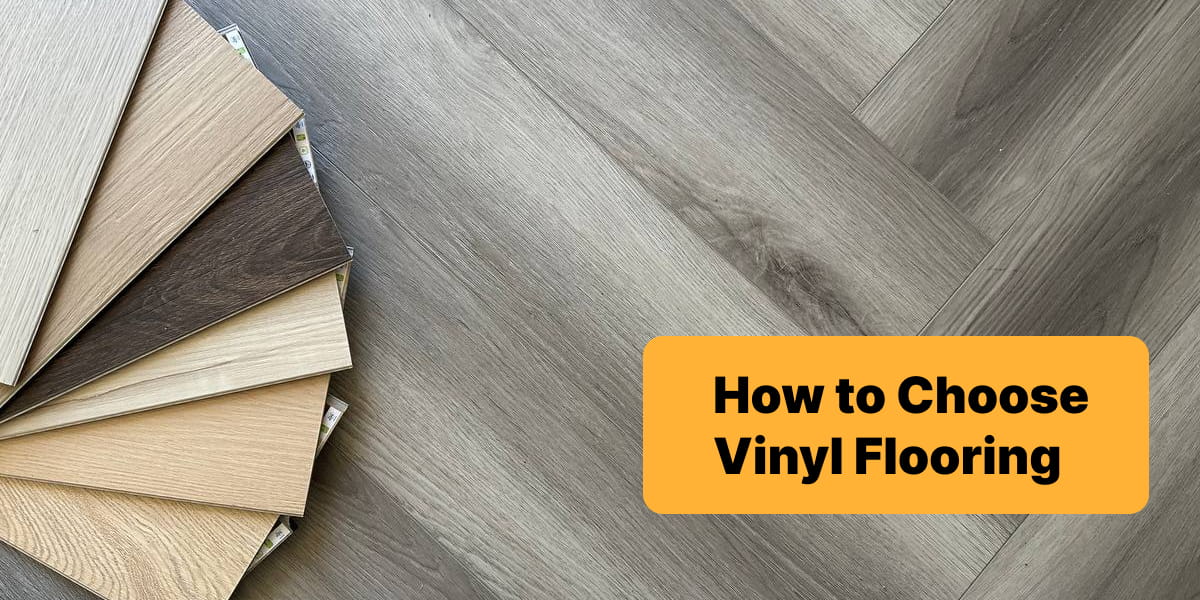
Vinyl is the most-installed flooring in Edmonton right now. It’s waterproof, durable, climate-friendly for our temperature swings, and looks more like real wood than ever. The challenge isn’t deciding if you want vinyl — it’s figuring out which vinyl, because the category is full of overlapping terms: LVT, LVP, SPC, WPC, rigid core, click-lock, glue-down, dry-back, 12 mil, 20 mil, 6 mm, 9 mm.
Most of those specs do matter, but not equally, and not for every project. This guide explains the types of vinyl available, the specs that actually predict performance, and how to pick the right product for your space — whether that’s a single basement, a full house, or a commercial fit-out.
The Three Categories of Vinyl Flooring
There are dozens of product names on the market, but they all fall into three categories. Once you understand these, the rest is variation.
1. Sheet Vinyl
A continuous roll, glued directly to the subfloor. The original “vinyl floor” most people picture from older homes. Fully waterproof because there are almost no seams. The cheapest option, but limited in style, easy to tear or puncture, and prone to looking dated quickly.
Where it makes sense: laundry rooms, utility spaces, low-budget rentals, temporary fit-outs.
2. LVT and LVP — Luxury Vinyl Tile and Plank
The category most Edmonton homeowners and commercial buyers choose. “Luxury” refers to the construction — multiple layers including a printed image layer that mimics wood or stone, plus a clear protective wear layer on top. LVT comes in tile shapes, LVP in plank shapes; otherwise they’re the same product.
LVP and LVT come in two installation formats:
- Glue-down (also called dry-back): planks are adhered directly to the subfloor with a vinyl-specific adhesive. Thinner profile, stays put, no shifting underfoot. Common in commercial spaces and high-traffic environments.
- Click-lock (floating): planks snap together along their edges and float over an underlay without being attached to the subfloor. Faster to install, easier to repair, doesn’t need adhesive.
3. Rigid Core: SPC and WPC
Rigid core is a sub-category of click-lock LVP, but with an engineered core that makes the plank significantly more stable than older click-lock products. The core is the layer underneath the printed image, and it’s what determines how the plank behaves over time.
- SPC (Stone Plastic Composite): core made from limestone powder + PVC + stabilizers. Dense, hard, and dimensionally stable across temperature swings.
- WPC (Wood Plastic Composite): core made from wood flour + PVC + a foaming agent. Slightly thicker, slightly softer, warmer underfoot.
Rigid core has become the default for residential installs in Alberta over the last few years, and for good reason — it handles our climate better than any other vinyl format.
SPC vs WPC: The Most Important Choice for Most Projects
If you’re picking residential or light commercial Luxury Vinyl Plank in Edmonton, the real decision is usually SPC versus WPC. Both are 100% waterproof, both come in similar styles, both install with a click-lock system. The differences are in feel and performance.
| Feature | SPC | WPC |
|---|---|---|
| Core | Limestone-based, very dense | Wood + foam, lighter |
| Profile | Thinner (3.5–7 mm typical) | Thicker (5–8 mm typical) |
| Feel underfoot | Harder, cooler | Softer, warmer |
| Sound | Slightly louder unless paired with acoustic underlay | Quieter due to foam core |
| Dent/impact resistance | Higher | Moderate |
| Temperature stability | Excellent — minimal expansion/contraction | Good, but more movement than SPC |
| Best for uneven subfloors | Yes — rigid core bridges minor imperfections | Less forgiving than SPC |
| Cost (relative) | Mid-range | Mid-range to premium |
For most Edmonton projects, SPC is the better default. Our climate goes from -30°C to +30°C, indoor humidity drops below 30% in winter, and SPC handles that better than any other format. WPC makes sense when comfort underfoot and sound dampening matter more than maximum stability — typical examples are bedrooms, family rooms, and upper-floor condos.
What Actually Matters When You Compare Products
Once you’ve picked a category, you’ll be looking at product specs. Most marketing focuses on total plank thickness, but that’s not the spec that predicts how long your floor will last.
Wear Layer (measured in mils)
The wear layer is the clear protective coating on top of the printed image. It’s what stands between your floor and daily impact: shoes, dog claws, dragged chairs, dropped pots, sand and grit tracked in from outside. The thicker the wear layer, the longer the floor maintains its appearance.
| Wear Layer | Best For | Typical Lifespan |
|---|---|---|
| 6 mil | Bedrooms, low-traffic rooms, short-term rentals | 5–8 years |
| 12 mil | Most homes — living rooms, hallways, kitchens | 10–15 years |
| 20 mil | Pets, kids, heavy residential traffic, light commercial | 15–20+ years |
| 22+ mil | Commercial, retail, multi-unit, senior living | 20+ years |
This is the single most important spec to check. A 6 mm plank with a 20 mil wear layer will outlast a 9 mm plank with a 6 mil wear layer in any real-world scenario.
Plank Thickness (measured in mm)
Plank thickness is what marketing leads with because “9 mm” sounds more impressive than “6 mm.” It does matter, but for different reasons than most buyers assume:
- Subfloor forgiveness: thicker planks bridge minor dips and high spots better.
- Feel underfoot: thicker planks feel more solid, more like real hardwood.
- Sound: thicker planks can be quieter, especially with attached underlay.
- Locking system: thicker planks usually have more robust click-lock joints, which install faster and stay tighter long-term.
What plank thickness does not do: protect against scratches or fading. That’s the wear layer’s job.
Core Type
Already covered above (SPC vs WPC). The core determines feel, stability, and noise. It does not determine waterproofing — both SPC and WPC are 100% waterproof.
Surface Finish and Texture
The top layer’s finish affects two things: how realistic the floor looks, and how well it resists scratches.
- Embossed-in-Register (EIR): texture follows the printed grain, so a knot in the image has actual depth. Looks the most like real wood.
- Smooth or lightly textured: easier to clean, looks less realistic, common on budget products.
- Hand-scraped or wire-brushed effects: rustic look, hides minor scratches better than smooth surfaces.
For premium products, an Aluminum Oxide or Ceramic Bead coating in the wear layer significantly improves scratch resistance. If a product spec mentions one of these, it’s a meaningful upgrade — not just marketing.
Plank Width and Length
Wider planks (7″ and up) make a room feel larger and more modern. Narrower planks (4–6″) look more traditional. Length matters less, but longer planks create fewer seams and look cleaner in open areas.
Attached Underlay
Many rigid core products come with an underlay pre-attached to the back. It saves time during installation, adds sound dampening, and slightly improves comfort. For most residential installs, it’s worth having. For glue-down products, there’s no underlay — the plank is bonded directly to the subfloor.
Click-Lock vs Glue-Down: When to Choose Which
This is a frequent point of confusion, so here’s the practical answer:
Click-lock floating works for the majority of residential projects up to about 1,500 sq ft of continuous space. It installs faster, costs less in labour, and individual planks can be replaced if damaged.
Glue-down is the better choice in three situations:
- Large open commercial spaces (1,500+ sq ft without a transition). Floating floors can develop “ripples” or shift over very large areas. Glue-down stays put.
- High-impact environments: rental units, retail, restaurants, gyms. The plank can’t shift underfoot or pop loose at edges.
- Wheelchair traffic, rolling carts, or heavy furniture: glue-down handles point loads better and won’t budge.
Glue-down also works well over radiant heated subfloors, where some click-lock products struggle with thermal expansion.
Edmonton-Specific Considerations
Local conditions shape the right product more than most generic guides admit.
Dry winters and the humidity gap. Indoor humidity in Edmonton homes routinely drops below 25–30% from December through March. SPC handles this with almost no movement. Solid hardwood would gap, and lower-grade laminate can cup or open at seams. SPC is forgiving here in ways most other products aren’t.
Concrete basement slabs. Most Edmonton homes have concrete basement floors. These need a moisture barrier under any vinyl product, and SPC is preferred because it tolerates the slight unevenness that’s typical of older slabs. Skipping the moisture barrier voids almost every manufacturer’s warranty.
Salt, sand, and grit from winter boots. Entryways, mudrooms, and main floor hallways take real abuse from December through April. A 20 mil wear layer in these zones is worth the upgrade — 12 mil shows visible wear faster than people expect.
New builds vs character homes. Newer suburbs like Windermere, Keswick, or Ambleside generally have flat, modern subfloors that work well with thinner SPC profiles. Older areas like Glenora, Bonnie Doon, or Westmount often need subfloor levelling first, and a thicker SPC plank (6.5 mm or above) bridges minor imperfections better.
Vinyl for Commercial and Multi-Unit Projects
Commercial LVP selection follows different priorities. The criteria here are durability under sustained traffic, ease of replacement, and warranty terms — not feel underfoot.
Multi-unit residential (apartments, condos, senior living, retirement homes) typically specifies SPC click-lock with a 20 mil or higher wear layer. The dimensional stability matters when you’re installing the same product across dozens of units with different temperature and humidity conditions. We’ve completed multi-unit projects across Edmonton and area, including the Aspen at Currents of Windermere and an 84-unit retirement living community in Sherwood Park, where SPC was the right choice for both consistency and long-term performance.
Office and retail spaces often go with glue-down LVT in 28+ mil wear layer. The product handles rolling chairs, foot traffic, and the occasional water spill. Glue-down also makes individual tile replacement straightforward without disturbing the rest of the floor.
Restaurants and high-moisture commercial need waterproof construction with a heavy wear layer (28 mil minimum) and proper edge sealing. Sheet vinyl with welded seams sometimes wins here for full water containment, even though it’s less attractive.
Health and senior living facilities often specify products with antimicrobial coatings and slip-resistant surfaces. ASTM testing certifications matter more than aesthetics in these contexts.
Common Mistakes When Choosing Vinyl
A handful of patterns repeat in nearly every project where homeowners are unhappy with their floor a year or two after install.
Buying for plank thickness instead of wear layer.
A thick plank with a thin wear layer scratches and dulls quickly. Always check the wear layer first.
Putting WPC in a high-traffic entryway.
WPC is comfortable, but the foam core compresses under heavy point loads — chair legs, heavy furniture, narrow heels. SPC is the better choice for entryways and main floor traffic paths.
Skipping the moisture barrier on concrete.
Saves $200–$400 upfront, voids the warranty, and often shows up as cupping or gapping within the first year. Always include it on basement and slab installs.
Choosing the cheapest sheet vinyl for a “temporary” install.
It almost always becomes permanent. If a space matters enough to floor at all, mid-range SPC or LVT is worth the small upfront difference.
Ignoring acclimation time.
Luxury Vinyl needs 24–48 hours in the room before installation to adjust to the home’s temperature. Cutting this short, especially in winter, leads to gaps appearing weeks later as the planks finish settling.
Final Thoughts
Vinyl is one of the most flexible flooring categories on the market — there’s a product for nearly every space, every budget, and every level of foot traffic. Getting the right one isn’t about finding the most expensive option. It’s about matching the type, core, and wear layer to the actual conditions of the room.
For most Edmonton projects, the safe defaults are:
- SPC click-lock with a 12–20 mil wear layer for residential
- Glue-down LVT with a 28+ mil wear layer for commercial
- Always include a moisture barrier on concrete
If you’re not sure which product fits your space, Northedge Flooring offers free in-home consultations across Edmonton and surrounding communities. We’ll look at your subfloor, talk through how the room is used, and recommend a product that actually fits — not the one with the highest margin.