Pets and floors don’t really get along. Claws scratch, accidents soak in, paws slide on smooth surfaces, and after a few years of life with a dog or cat, almost any floor in the house shows the wear.
Most articles on this topic just list “best materials for pets” and call it done. But there isn’t actually one best floor for every pet owner. There are materials that handle some problems better than others, and a few honest trade-offs you need to think about before choosing. This piece walks through what’s actually going on with pets and floors, which materials hold up, and how to pick something that fits your pet, not just a generic recommendation.
What Pets Actually Do to Floors
It helps to start with the specific problems, because different materials solve different ones.
Scratches. This is the most visible damage. Dog claws, cat claws, claws clicking across a hard surface for years. Bigger dogs leave deeper marks. Untrimmed nails do more damage than trimmed ones, but even well-kept claws will eventually leave fine scratches on softer materials.
Accidents and spills. Puppy training. Cats who decide they’re done with the litter box. Older pets with bladder issues. Water bowls knocked over. Hairballs. Whatever the cause, liquid sitting on a floor — sometimes for hours before anyone notices — is a real test of waterproofing. And “water-resistant” is not the same as “waterproof,” which we’ll get to.
Slipping. Smooth, glossy floors can be genuinely dangerous for pets, especially older dogs and larger breeds. We’ve seen plenty of homes where the dog avoids certain rooms because the floor feels unsafe. Hip injuries from slipping aren’t rare. This part rarely gets discussed, but it matters more than most people realize.
Noise. Claws on hard floors are loud. If you live in a condo, an upper unit, or just like a quiet house, this is worth thinking about. Some materials are quieter than others, and underlay makes a noticeable difference.
Fur, dander, and dust. Pet hair gets into everything. Some floors hide it; some make it visible from across the room. Some hold onto dander and allergens; some don’t. If anyone in the house has pet allergies, this part isn’t just cosmetic.
What “Pet-Friendly” Actually Means
“Pet-friendly flooring” is a marketing phrase that gets used loosely. When we look at whether a floor will actually handle pets well, four things matter:
Wear layer.
This is the clear top coating on vinyl and laminate, measured in mils. Twelve mil is okay for most homes. Twenty mil or higher is what we’d recommend for any home with active pets, especially dogs. A thicker wear layer is the single biggest predictor of how scratch-resistant a floor will be in practice.
Surface texture.
Hand-scraped, wire-brushed, and embossed textures hide scratches and provide better grip for paws. Smooth, glossy finishes show every mark and can be slippery. Texture is doing two jobs at once — disguising wear and helping pets stay upright.
Waterproof construction.
For pets, “waterproof” needs to mean the core material itself doesn’t absorb water, not just that the surface repels it. SPC vinyl and tile pass this test. Laminate, even modern “water-resistant” laminate, usually doesn’t.
Color and pattern.
Honestly, this one is practical, not aesthetic. Mid-tone wood looks (medium oak, light walnut) hide scratches, hair, and dust far better than very dark or pure light floors. Pattern variation helps too. A single uniform colour shows every flaw.
What Actually Works
After installing flooring in a lot of pet households over the years, here’s what we’ve seen hold up.
SPC vinyl plank is the practical answer for most pet owners. It’s fully waterproof, the wear layer can be specified high enough to handle claws, the textures available are good for traction, and it stays stable in our climate. We install it in homes with everything from a single small cat to multiple large dogs, and it consistently holds up. The version we usually recommend for active pet households is SPC with a 20-mil wear layer or higher and an embossed wood-look surface. Cheap thin vinyl with a 6-mil wear layer will not last in a busy pet home, so this is one of those places where saving a couple of dollars per square foot upfront costs more later.
Porcelain or ceramic tile is the most damage-resistant option there is. Claws don’t scratch it. Urine doesn’t damage it. Spills wipe up in seconds. The downsides are real though: it’s cold, it’s hard, and it can be slippery for pets if the finish is wrong. We mostly recommend tile for entryways, mudrooms, laundry rooms, and bathrooms — places where the durability matters most and where the cold doesn’t bother the pet. Textured or matte finishes give pets much better grip than polished tile.
Laminate is more complicated than most guides admit. Modern laminate has good scratch resistance and can actually outperform some vinyl on dry surface wear. But laminate has a fibreboard core, and that core swells if it gets wet. “Water-resistant” laminate buys you time during a small spill, but a puddle of urine sitting on the seam for a few hours can still cause swelling and warping. For pet households, this is a real risk. We sometimes install laminate in homes with very well-trained adult pets, but for puppies, multiple animals, or any household where accidents are likely, vinyl is the safer call.
Engineered hardwood can work in pet homes, with conditions. A high-quality aluminum oxide finish helps with scratch resistance. Harder species (white oak, hickory) hold up better than soft species (pine, fir). And accidents need to be cleaned up quickly because wood under a wet spot will absorb moisture and stain. We’ve installed engineered hardwood successfully in homes with cats and small, calm dogs. With large active dogs, scratches eventually show through almost any wood finish, and there’s no fixing that without sanding and refinishing. If you genuinely want real wood in a pet home, go in with realistic expectations about how it’ll look in five years.
Carpet is where most articles say “no” and move on, but the reality is more nuanced. Wall-to-wall broadloom in a busy household with multiple pets is usually a bad idea — stains, smells, and replacement costs add up fast. But carpet in a bedroom for an older dog with sore joints can be the right call. Carpet tiles, where you can replace individual squares if something gets ruined, work surprisingly well for playrooms and rec rooms. The mistake is treating carpet as either always-yes or always-no. It depends on the room and the pet.
What to Be Careful With
A few things to either avoid or think hard about.
Solid hardwood is rarely a good choice for pet homes. It scratches easily, absorbs moisture, and is expensive to refinish. The look is beautiful when new, less so after a few years with claws on it. If hardwood is non-negotiable, engineered with a strong finish is the realistic option.
Glossy finishes of any kind. Whether it’s high-gloss tile, glossy laminate, or polished concrete, smooth shiny floors are slippery for pets and show every scratch. Matte or textured finishes are better in almost every way for a pet home.
Very dark or pure white floors. Both show everything. Dark floors highlight dust, light-coloured pet hair, and water spots. White or very pale floors show dirt, dark hair, and pawprints. Mid-tones in the brown or grey-brown family are far more forgiving.
Wear layers under 12 mil in any pet home. This includes a lot of budget vinyl on the market. The product might look identical to a 20-mil version in the showroom, but in two years the difference will be obvious.
Your Pet Matters Too
The right floor depends partly on the animal. A few examples we run into often:
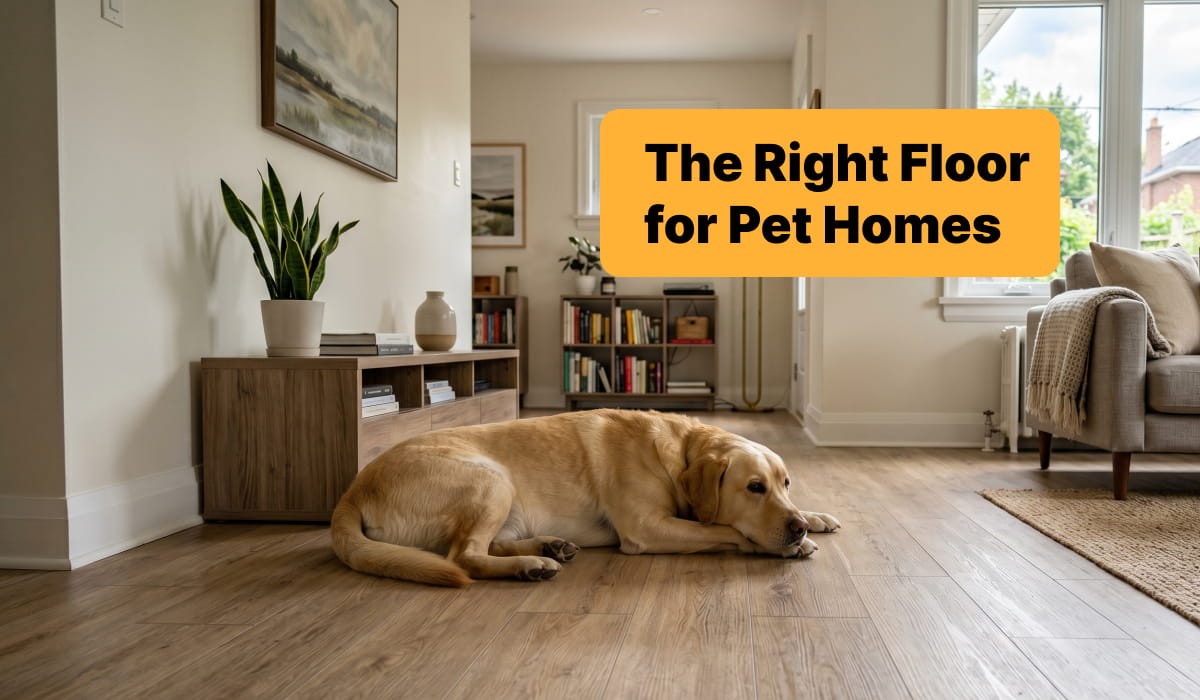
- A big active dog (lab, shepherd, retriever) puts a lot of stress on floors. They have heavier claws, they slide more when they run, and they’re harder on any material. For these homes, SPC vinyl with 20+ mil wear layer and a textured surface is usually the right call.
- A senior dog, regardless of size, has different needs. Slipping is a bigger risk because of joint issues, and they spend more time lying on the floor. Soft surfaces in their primary rooms (carpet tiles in a bedroom or living area) can genuinely improve their quality of life, even if vinyl is elsewhere in the house.
- Cats are easier on floors than dogs in most ways, but they scratch differently. Vertical claws when they jump down from furniture, occasional accidents outside the litter box, and hairballs are the main issues. Vinyl handles all of this well. Multiple cats raises the accident risk, so waterproof matters more.
- Puppies and kittens are temporary worst-case scenarios. Teething, training accidents, energy. A floor that can handle a chaotic first year will handle anything that comes later. If you’re choosing flooring with a young pet in mind, plan for the worst couple of years rather than the calm period after.
The Edmonton Factor
A few local realities worth mentioning.
Winter is hard on entryway floors in any pet home. Salt, slush, de-icer chemicals, and wet paws come in dozens of times a day. Tile or vinyl in the entryway is essential — anything else gets ruined. A good absorbent mat that the dog walks across before reaching the rest of the floor saves a lot of cleaning.
De-icer on paws is also a real issue. Pets lick salt off their feet, which is unhealthy for them and leaves traces on the floor. Wiping paws at the door is worth the habit, both for the pet and the floor.
Hardwood and pets are an even harder combination in Edmonton specifically. Our humidity drops below 25% in winter and climbs in summer, which causes hardwood to expand and contract. Combine that movement with scratches from claws and dry-air gaps, and the floor ages faster than it would in a more stable climate.
Common Mistakes We See
Three patterns show up over and over in pet homes:
- Choosing the cheapest vinyl assuming “vinyl is vinyl.” A 6-mil wear layer with a smooth surface looks fine for a year, then shows scratches and starts to lose its print. The same product profile with a 20-mil wear layer holds up many times longer. The price difference is real but small compared to replacing the floor.
- Putting solid hardwood in a home with a large dog because the showroom photos looked great. We’ve come into homes a few years later to replace it, every time. If you want the wood look in an active pet home, wood-look LVP with a good wear layer is genuinely indistinguishable from across a room and will not scratch in the same way.
- Forgetting about traction. People pick a floor for how it looks in the showroom and don’t think about whether their dog can run on it without slipping. If your dog is currently slipping on a smooth floor, that’s a quality-of-life issue, not just a flooring one. Textured surfaces, area rugs in active paths, and matte finishes all help.
Final Thoughts
There’s no flooring that’s invisible to pets. Whatever you choose will show some wear over time, because that’s just what happens in a home with animals. The goal is picking a floor that handles your specific pet’s specific patterns of use without becoming a project every year.
For most homes in Edmonton with pets, SPC vinyl with a 20-mil wear layer and a textured wood-look surface is the practical answer. Tile is the right call for entryways and wet rooms. Engineered hardwood works in some homes, but with realistic expectations. Carpet still has its place in bedrooms and quiet rooms. Solid hardwood usually doesn’t belong in a pet home at all.
If you’re trying to figure out what’ll work for your space and your pets, Northedge Flooring offers free in-home consultations across Edmonton and the surrounding area. We can look at your rooms, talk through how your pets actually use the house, and recommend a floor that holds up to the reality of your home — not a generic spec.